

We use cookies to provide you a better service and analyze traffic. To find out more about cookies, please see our Cookie Declaration. By continuing to browse our website, you agree to our use of cookies.

Agree
Manage

Cookie Settings

We use cookies to provide you a better service and analyze traffic, To find out more about cookies, please see our Cookie Declaration.

Essential

Our website relies on these cookies for proper functionality.

Functionality

These cookies are utilized to retain your preferences, such as language selection.

Statistics

Cookies enable us to gain insights into our visitors and enhance their browsing.

Advertising

Cookies that are used to track conversions for ads platforms.

Confirm
Support your soccer team to win 1-year Premium + official home jersey!
Let's go!
Event closes in:
0 DAYS
0 HOURS
0 MINS
0 SECS

QUIC Protocol

QUIC is a modern transport protocol built for better connection performance. With X-VPN, it helps you enjoy a faster, smoother online experience.

  • Smooth under congestion
  • Seamless across networks
  • Stable in poor conditions

What Is QUIC?

QUIC (Quick UDP Internet Connections) is a modern UDP-based transport protocol that combines data transport and security. First developed by Google in 2013 and later standardized by the IETF for HTTP/3, it was designed to address TCP’s limitations in mobile, high-latency, and unstable network environments.

How Does QUIC Work?

Starting from the connection lifecycle, let’s see how QUIC completes communication between the client and server.

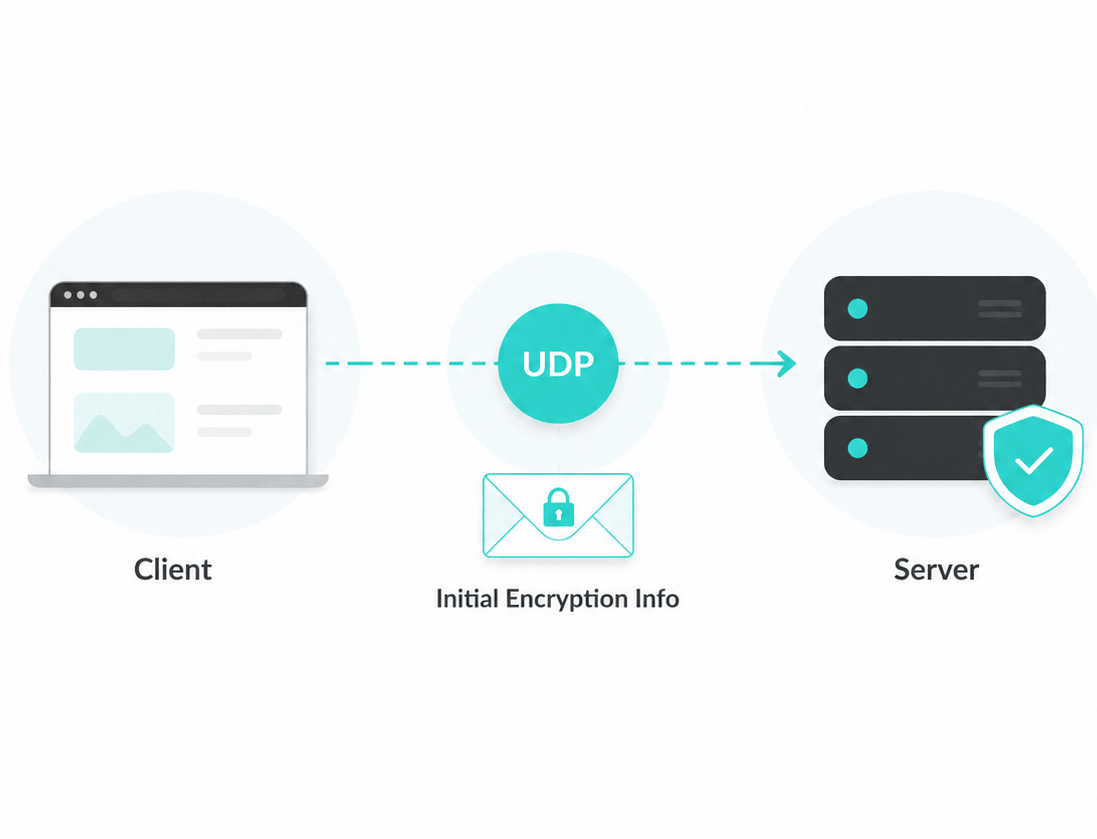
Start the Connection

The client first “knocks” on the server’s door and says, “I’m ready to send and receive content,” while bringing basic security details for the exchange (UDP and initial encryption information).

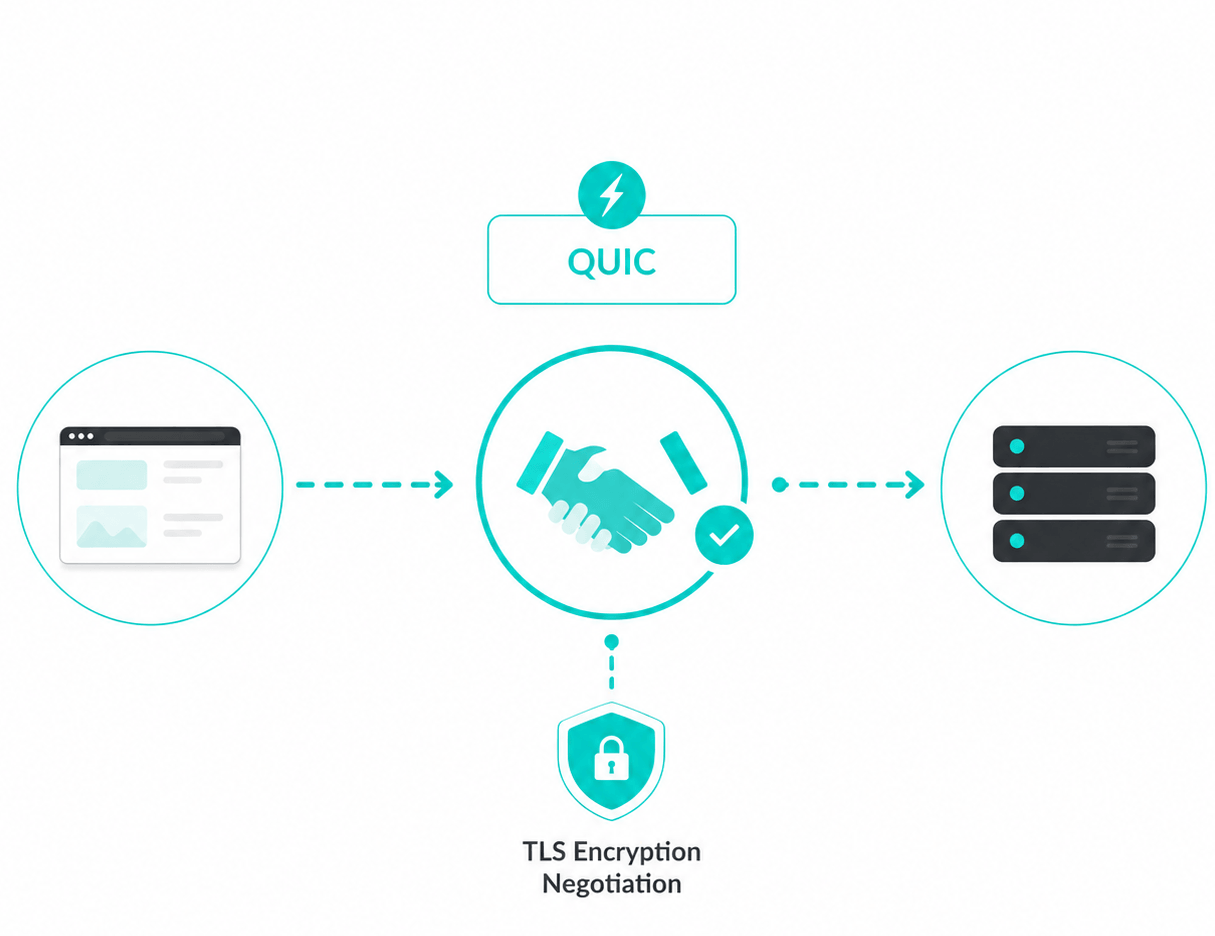
Complete the Handshake

After the server responds, QUIC quickly checks that both sides can trust each other and agrees on how this exchange should be protected (TLS handshake). If the two sides have “met” before, it can use what was agreed before to start sooner(0-RTT).
Transfer Data

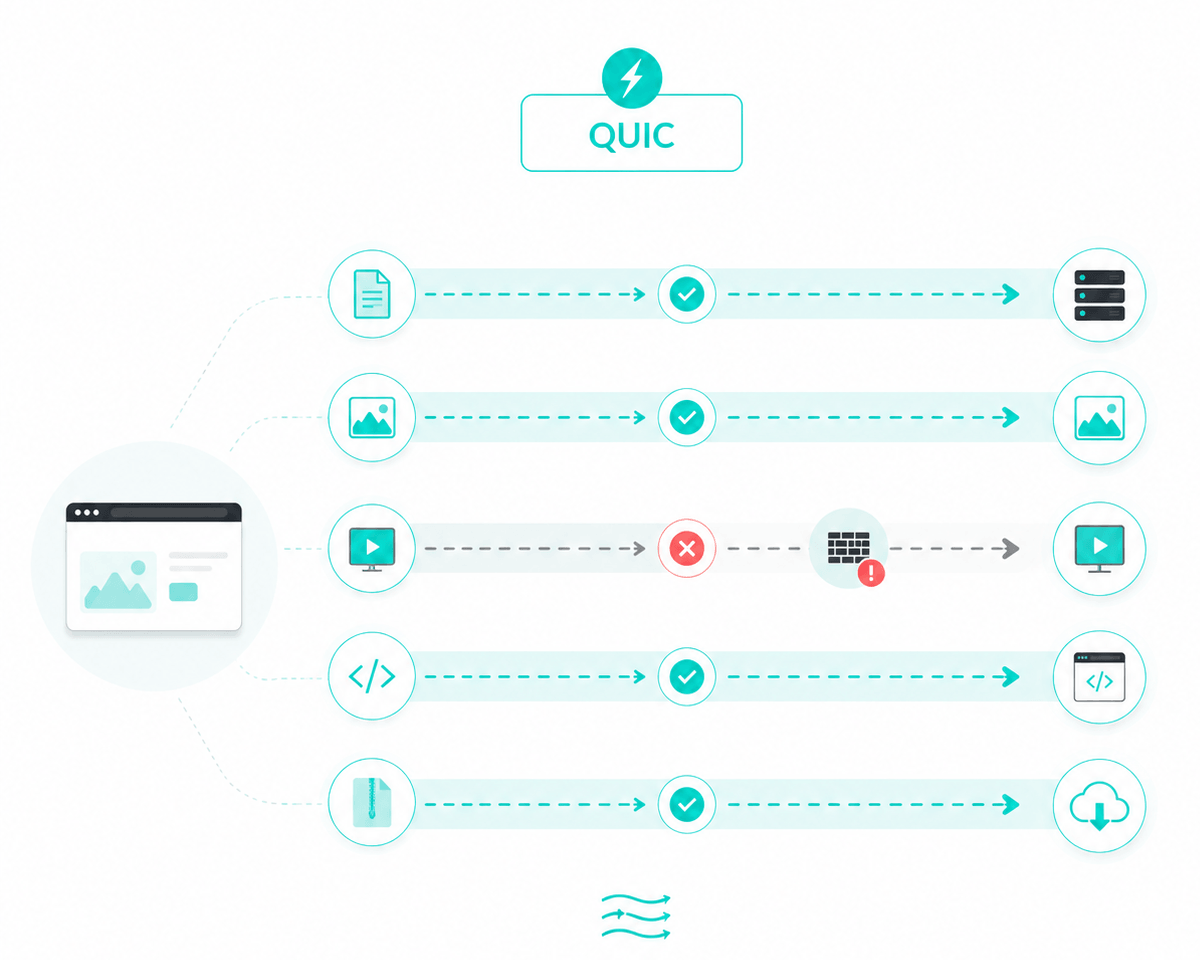
QUIC sends text, images, videos, and other content as separate “packages” (multiplexed data streams). If one package is delayed, the others do not have to wait.

Maintain the Connection

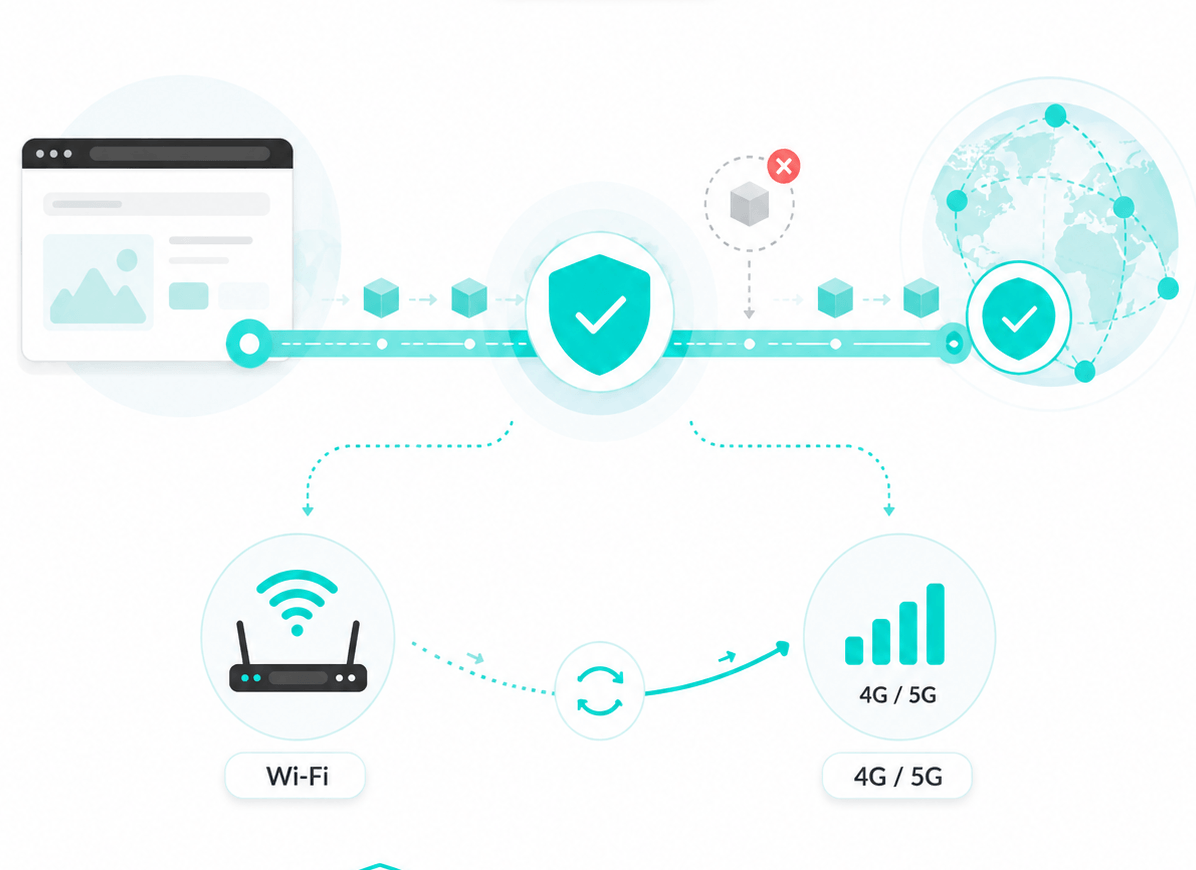
During transfer, QUIC keeps track of packages that do not arrive on time and adjusts when the route changes, such as switching from Wi-Fi to mobile data. Even if the route changes, the exchange does not have to start over.
For more details, see the QUIC core specifications for transport, TLS security, and loss detection and congestion control.

TCP vs QUIC: Where QUIC Performs Better

QUIC was designed for faster, more reliable modern connections, and adapts better to today’s networks than TCP.

Faster Response

TCP usually sets up the connection before encryption begins. QUIC combines both into one handshake, helping websites, apps, and requests start faster.

More Secure Connections

TCP does not include encryption by default and usually relies on TLS separately. QUIC has TLS 1.3 built in, protecting data from the start.

Smoother Experience

TCP sends data in order, so one lost packet can slow down what follows. QUIC separates data into different streams, so one delay is less likely to block the whole connection.

More Stable Mobile Connections

TCP identifies connections by IP/port—network changes break it easily. QUIC uses a Connection ID (like an ID card) to keep recognizing the same connection after network switches, ensuring better stability.

Try QUIC with X-VPN

Driven by performance benefits, QUIC is gaining adoption in VPNs, though it is not yet widespread. X-VPN now supports QUIC on multiple platforms. As an example, here’s how to select QUIC on the mobile app.

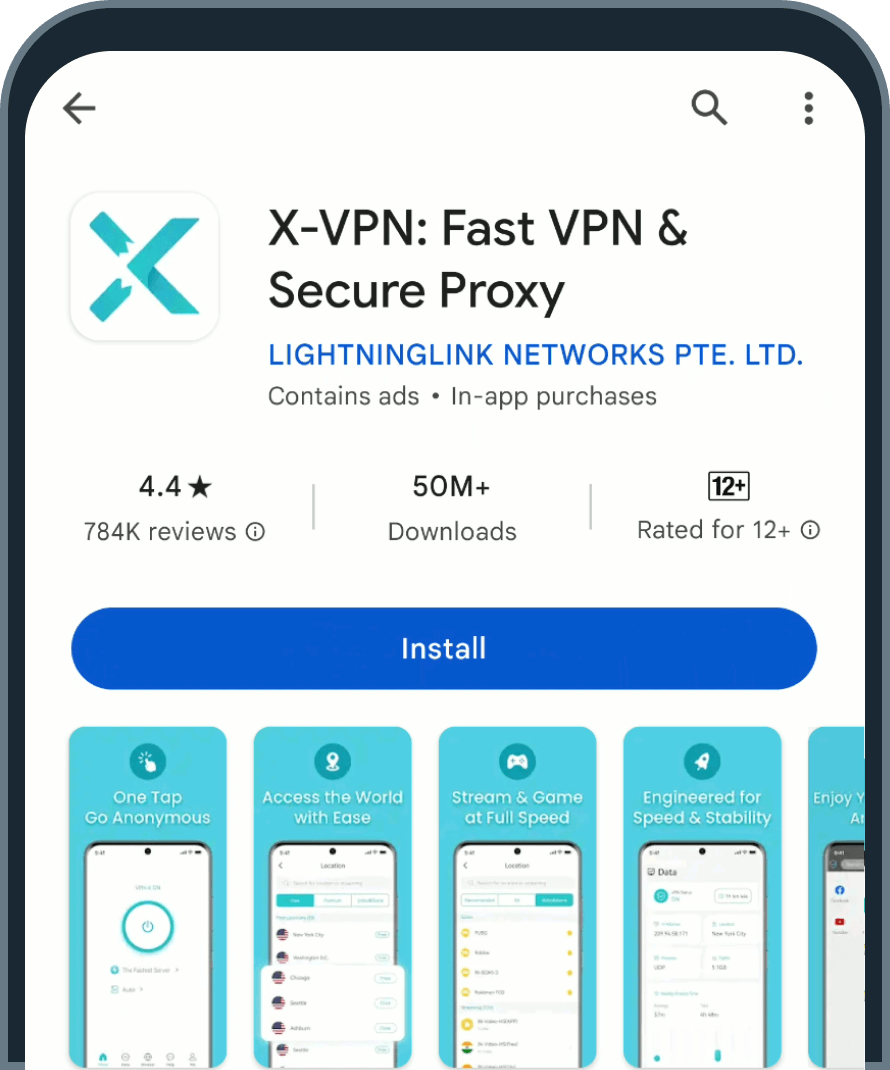
01.Download

Download and install X-VPN for free. No login required.

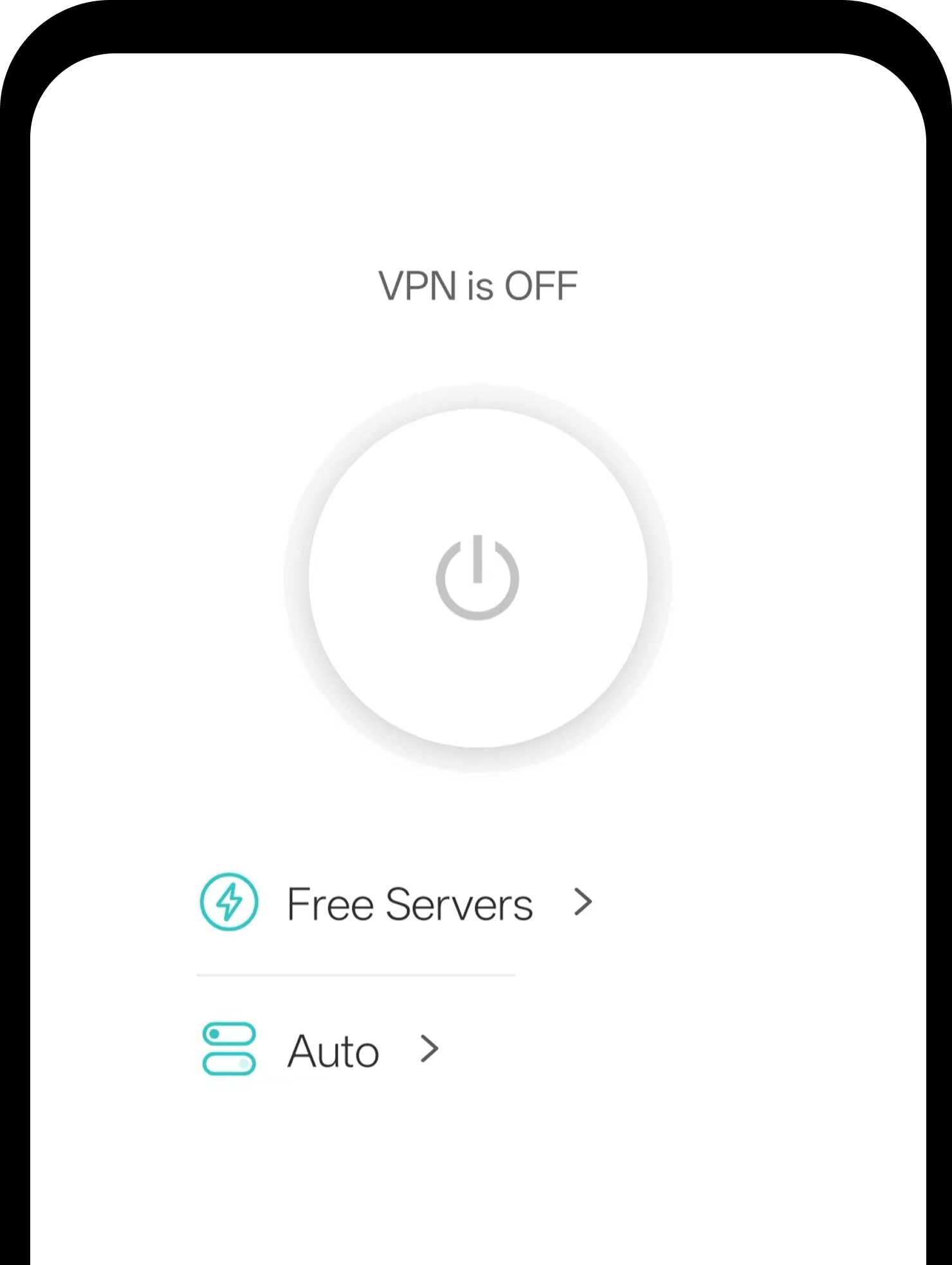
02.Setting

Run the X-VPN app and go to the Home page. Tap “Auto” in the middle of the screen to open the protocol settings.

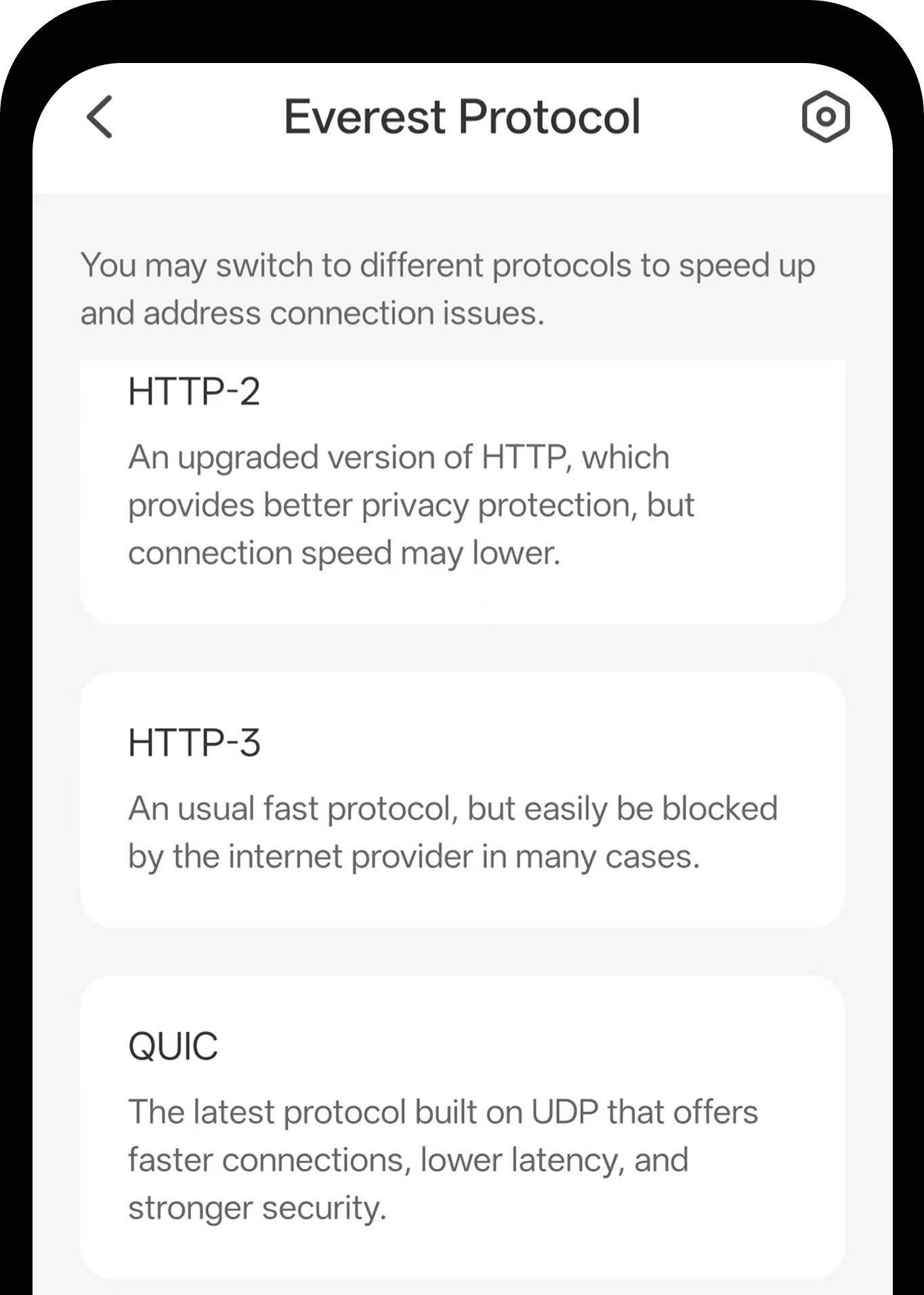
03.Select QUIC

On the Protocol page, click “Everest” then under Everest Protocol, scroll and select “QUIC.”

Where QUIC Is Used Today

Beyond VPNs, QUIC’s advantages in speed, reliability, and stability have led to its adoption across a growing range of modern services.

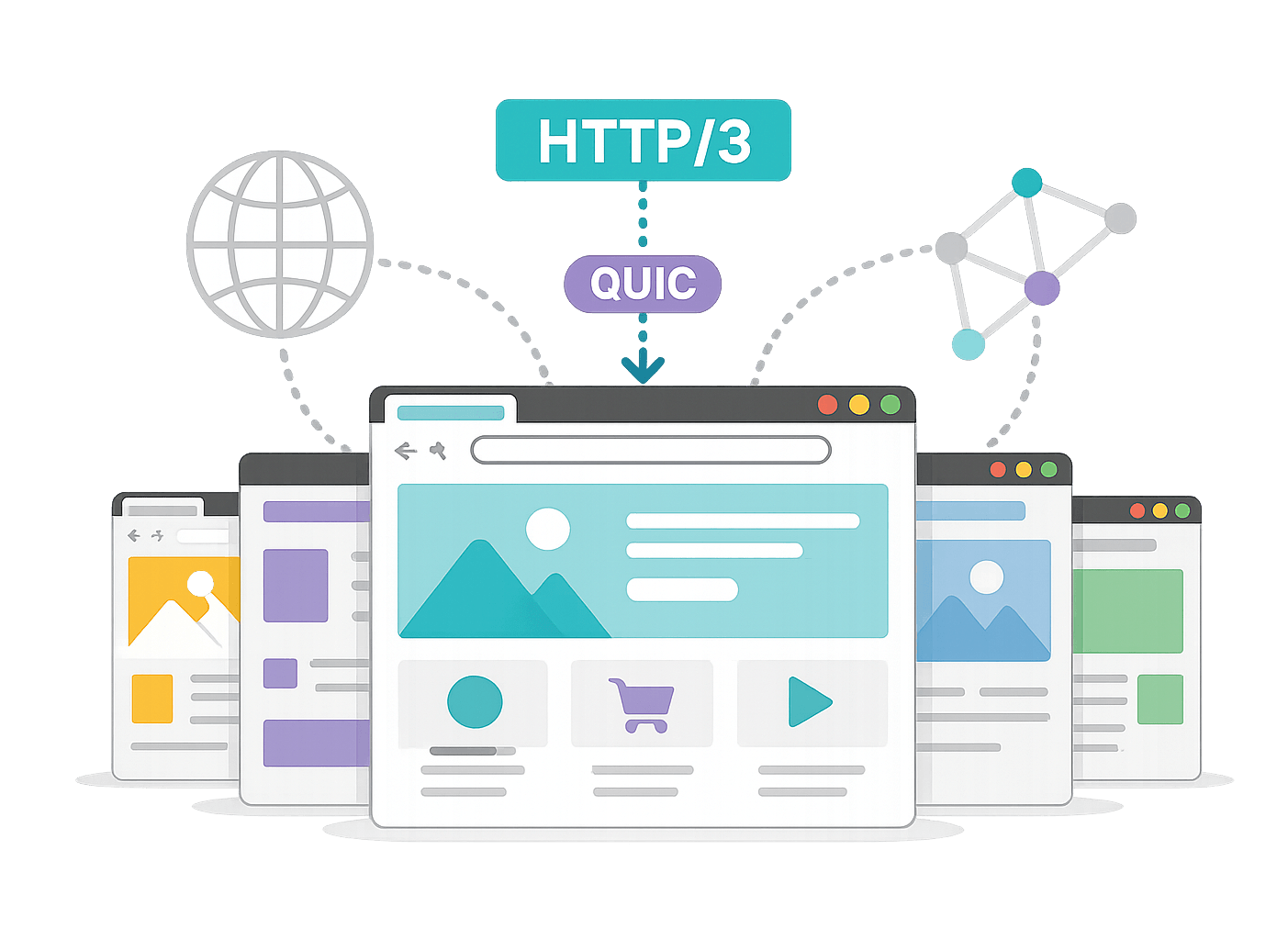
Web Ecosystem

HTTP/3 is one of the most typical use cases of QUIC, with many browsers and websites already using QUIC through HTTP/3.

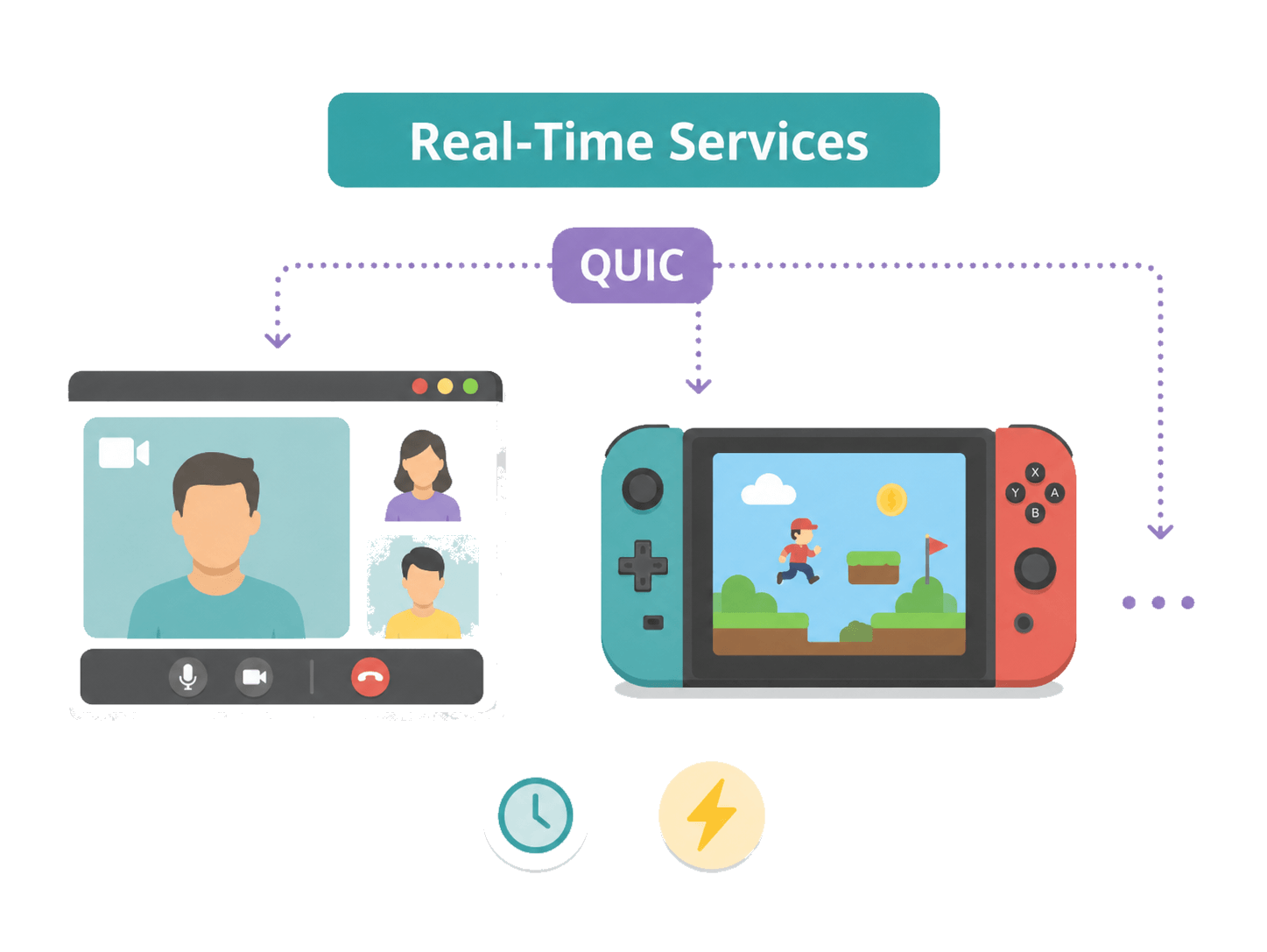
Real-Time Services

QUIC is used in video conferencing, live streaming, and online gaming to support low-latency transmission.

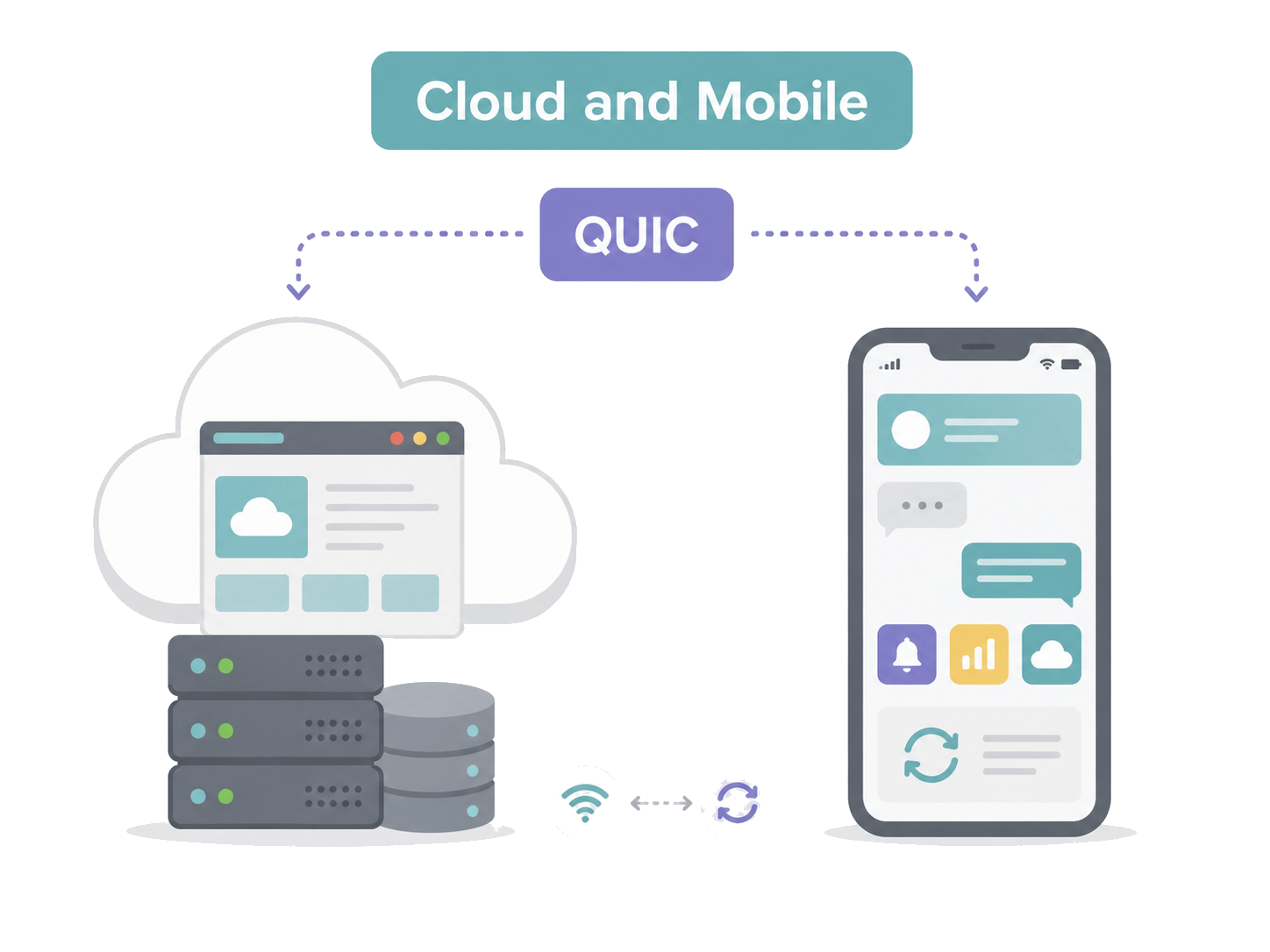
Cloud and Mobile

Cloud apps, distributed services, and mobile apps use QUIC to improve frequent server communication.

The Current Status and Future of QUIC

As QUIC enters more real-world scenarios, what will its evolving adoption mean for the future of internet transport?

Future Trends

As HTTP/3 adoption continues to grow, QUIC is becoming more than a transport protocol for improving connections. It is expected to play a growing role in shaping the next generation of internet communication, providing a foundation for faster, more secure, and more reliable online experiences.

Current Adoption

With growing HTTP/3 support, QUIC usage is rising. As of June 2026, W3Techs reports QUIC on 8.7% of websites and HTTP/3 on 35.9%, indicating QUIC's increasing real-world deployment.

Existing Challenges

QUIC is still expanding and may not work in every network environment. Some networks may limit UDP traffic, while its encrypted design requires newer inspection and troubleshooting methods.

Try QUIC with X-VPN Today

QUIC is already shaping the future of faster, more adaptive internet connections — and X-VPN is ready for it. Try QUIC on X-VPN for free, no sign-up required, and experience a more responsive VPN connection.

Frequently Asked Questions

What is the QUIC protocol?

QUIC is a modern transport protocol built on UDP and designed to make internet connections faster, more secure, and more adaptable. Unlike traditional TCP-based connections, QUIC combines transport-layer reliability with built-in encryption and improved connection management. This allows it to reduce connection setup time, handle packet loss more efficiently, and maintain smoother communication in changing network conditions.

Is QUIC the same as HTTP/3?

No. QUIC and HTTP/3 are closely related, but they are not the same thing. QUIC is the underlying transport protocol, while HTTP/3 is the application-layer web protocol that runs on top of QUIC. In simple terms, QUIC provides the connection foundation, and HTTP/3 uses that foundation to deliver faster and more efficient web communication.

Why does QUIC use UDP instead of TCP?

Think of TCP like an old, strict post office – it's reliable but slow because it needs a long introduction before sending anything, and if one letter gets lost, it holds up all the others. UDP is like a blank envelope – fast and simple, but it doesn't care if letters arrive. QUIC uses UDP as that blank envelope, but then adds its own smart system on top to make sure everything arrives safely and quickly, without the old post office's delays.

What is 0-RTT in QUIC?

It means "zero wait time" for returning visitors. Imagine you go to a coffee shop for the second time – you already know the barista, so you can just shout your order while walking in, instead of waiting to say hello first. That's 0‑RTT: on your second visit, your data starts flying immediately, making everything feel instant.

Does QUIC replace TCP?

Not completely. QUIC is taking over the job of delivering web pages (like for websites you visit), because it's faster. But TCP is still used for many other important things like banking systems or email servers, where stability matters more than speed. So they'll both stick around – QUIC for the fast lanes, TCP for the heavy trucks.

Does QUIC always make connections faster?

Not always. QUIC shines on shaky networks and repeat visits (thanks to 0‑RTT), but on stable connections its software overhead can slow it down, and some firewalls block its UDP traffic. So it's a specialist for tricky conditions, not a guaranteed speed‑up everywhere.